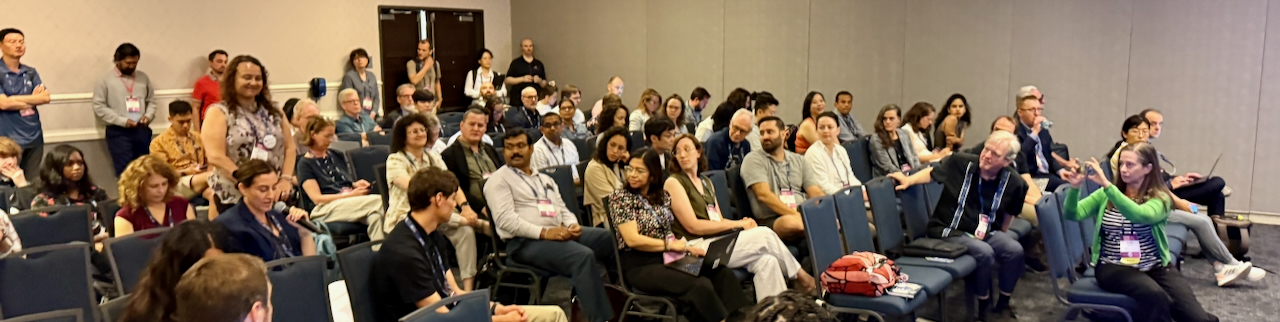
 The 27th Bioinformatics Open Source Conference, BOSC 2026, took place July 14-15 as part of Intelligent Systems for Molecular Biology (ISMB) 2026, in Washington, DC, USA (with a virtual participation option).
About 2100 people attended ISMB 2026 (1800 in person), with 10 or more parallel sessions to choose from every day. We estimate that over 200 people participated in BOSC.
The 27th Bioinformatics Open Source Conference, BOSC 2026, took place July 14-15 as part of Intelligent Systems for Molecular Biology (ISMB) 2026, in Washington, DC, USA (with a virtual participation option).
About 2100 people attended ISMB 2026 (1800 in person), with 10 or more parallel sessions to choose from every day. We estimate that over 200 people participated in BOSC.
The BOSC program
BOSC 2026 had a packed program that included two keynote talks, two panels, 33 talks chosen from submitted abstracts, 44 posters, and two dinners. The complete program can be found on our schedule page.
Keynote: Maryam Zaringhalam
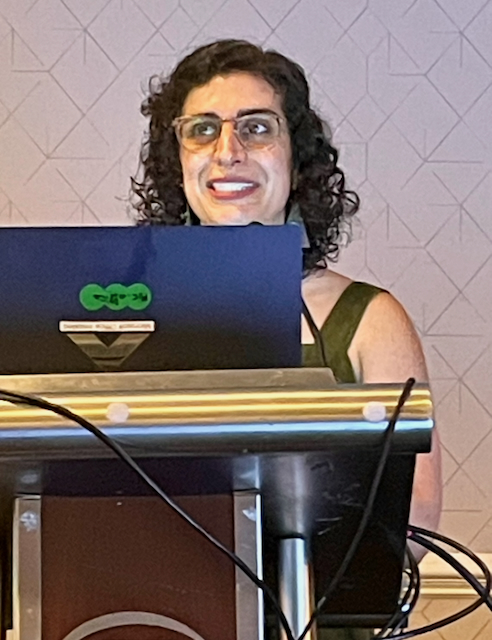
Maryam Zaringhalam of the Center for Open Science delivered the first BOSC 2026 keynote talk, Science for the People: Open science to engage and build trust with communities. Drawing on public survey data, Dr. Zaringhalam challenged the familiar claim that the public simply does not trust science. As she put it, “Trust is something that we must work to earn and retain. Open science and public engagement can help us do just that.” Storytelling can help establish that connection by making scientific work more understandable and by showing the people, choices, and values behind it.
Keynote: Eric Green
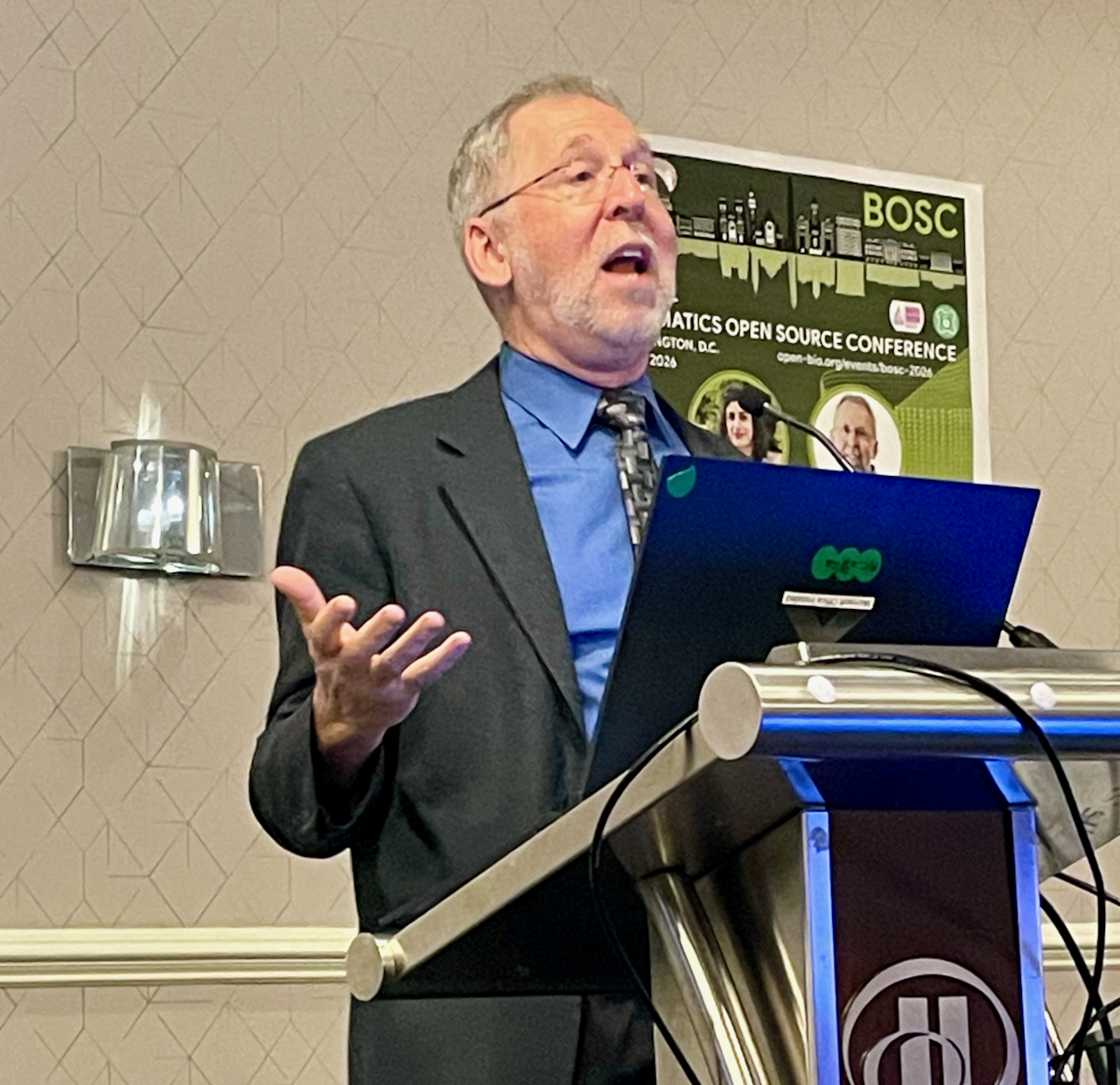
Dr. Eric Green’s keynote focused on the realization of genomic medicine. He was one of the drivers of the Human Genome Project, pursued a lengthy career in public service at the NIH, and is now Illumina’s Chief Medical Officer. In his talk, From the Human Genome Project to the Realization of Genomic Medicine: A Scientific, Medical, and Societal Journey, Dr. Green shared his perspective on the journey from the billion-dollar Human Genome Project to our current ability to sequence a human genome in a few hours for under $1,000. But generating data is only the first step; our true challenge lies in making it clinically computable. Dr. Green stressed that while genomics has reached mainstream healthcare, we still face tremendous hurdles regarding health equity, privacy, and literacy. Overcoming these challenges requires strong advocacy for robust data principles to ensure equitable precision medicine for everyone.
Panel #1: Policies and Strategies for Resilient Open Science
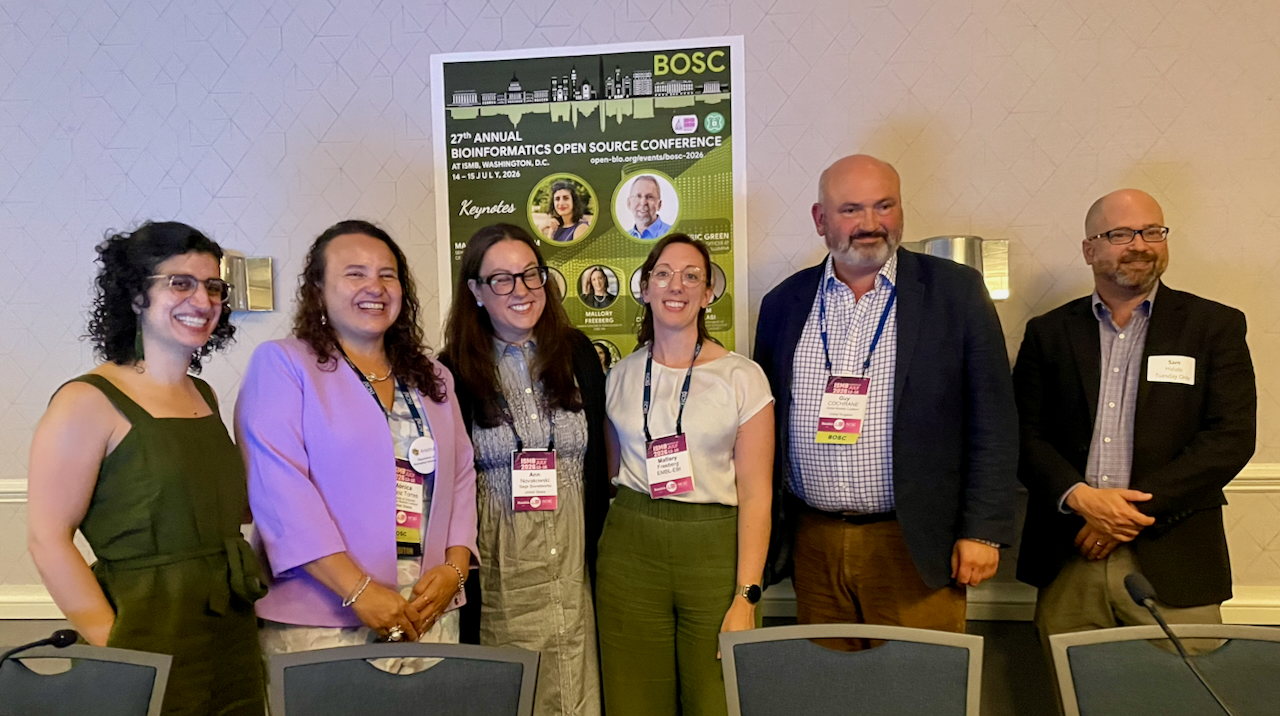
The first BOSC panel, Policies and Strategies for Resilient Open Science, examined how we can ensure that essential research infrastructure is preserved amid shifting political priorities, limited budgets, security concerns, and increasingly complex data-sharing laws. A key focus of the panel was the fragility of open-science infrastructure. Large scientific ecosystems often depend on a small number of funders, leaving widely used resources vulnerable to a single budget cut or policy change. Sustainable funding is also difficult when the full costs of maintaining infrastructure – including data preservation, user support, security, compliance, and continued development – are not clearly understood. The panel concluded that resilience depends on more than technology. It requires better and more durable funding models, transparent costs, appropriate security, international coordination, interoperability, and meaningful participation from the communities that create and use scientific data. Regarding the potential tension between openness and security, panelists pointed out that these principles do not have to be in conflict. Effective systems should distinguish between data that can be openly shared and data requiring controlled access or additional safeguards, rather than treating security as a blanket reason to restrict scientific exchange.
Panel #2: Open Source in the Age of AI
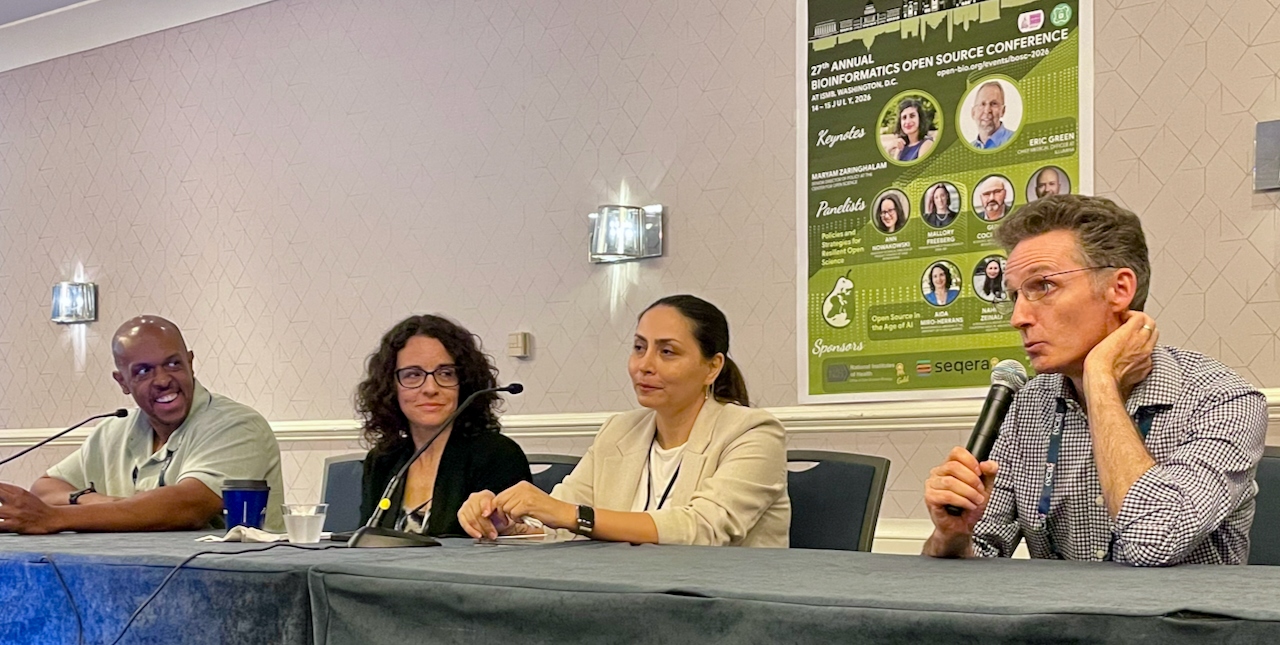 BOSC 2026 ended with a panel on Open Source in the Age of AI, which covered questions including “Do you feel generative AI is more of a threat or an advantage for open-source bioinformatics?” (the panelists’ views included the full range) and “Open source has traditionally rewarded reuse, contribution, transparency, and community trust. Which of those values is most challenged by AI-generated code?” (all of them, but particularly reuse and trust).
The audience asked the panel some thought-provoking questions. One person asked, “If OpenAI or Anthropic were in the room with us, what would you ask them?” (“a confidence rating on the outputs” was one answer). Another asked how the panelists felt about the rise of co-scientists. Speaking from a clinical perspective, one panelist pointed out that it’s dangerous to rely on AI-generated answers when the wrong information could potentially kill a patient. Eventually, an audience member asked the “elephant in the room” question: is there still a need for open source when AI can just rewrite everything from scratch? One panelist pointed out that without open-source analysis tools, reproducibility would be a challenge. Another noted the inequity angle: some people literally can’t afford to pay for AI. And, of course, there are climate and conservation issues associated with the high energy and water use of AI – though one panelist sardonically commented that he used to lie awake at night worrying that climate change will end life as we know it, but now he feels it’s much more likely AI will kill us than global warming.
Talks selected from submitted abstracts
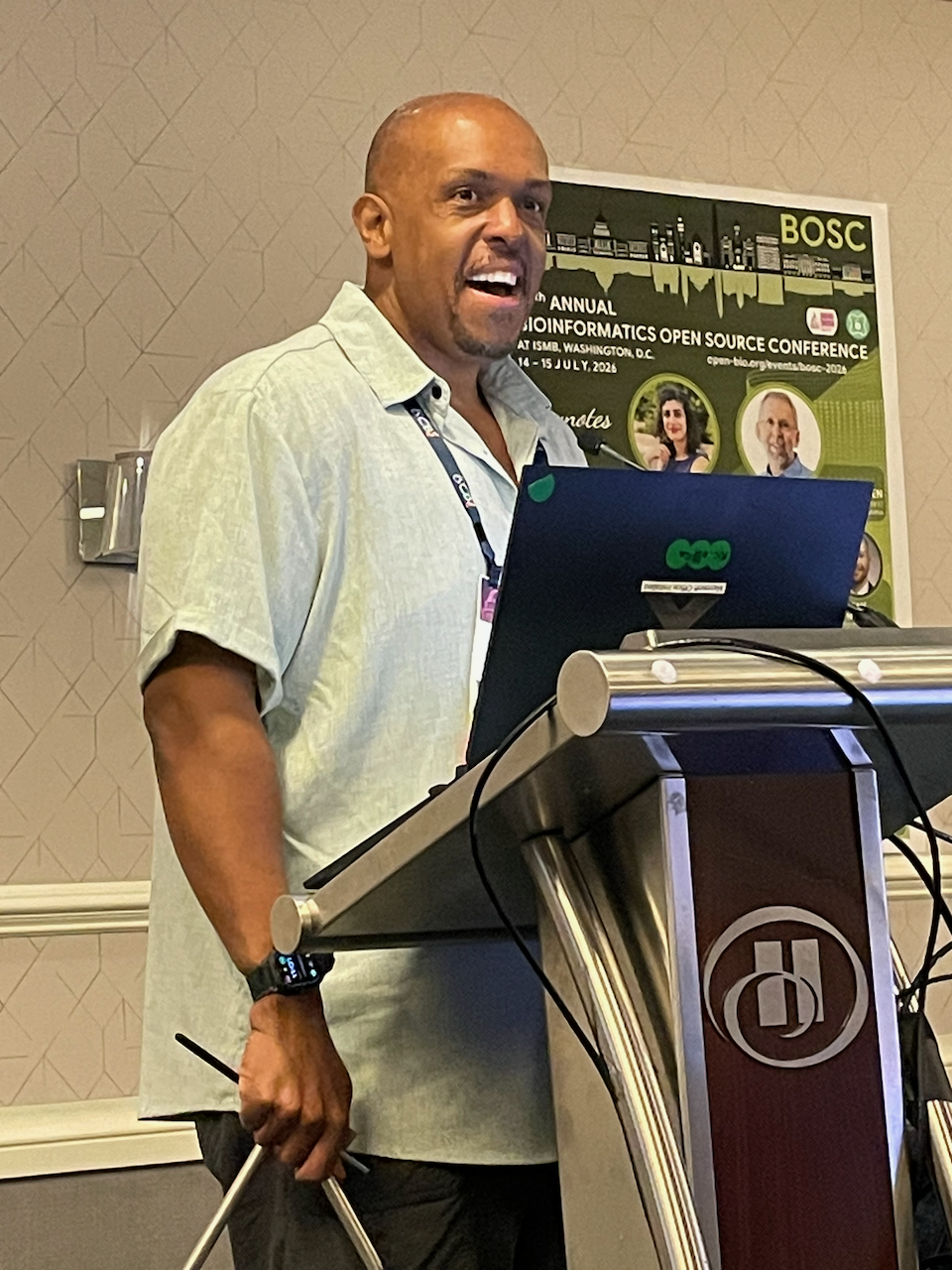
Joint BOSC/BOKR session: Like last year, BOSC 2026 included a joint session with the Bio-Ontologies and Knowledge Representation (BOKR) COSI (Community of Special Interest). The BOSC/BOKR session covered topics including metadata and annotation representation, knowledge graphs, and sustainable ontology infrastructure. The FAIR data principles (Findable, Accessible, Interoperable, Reusable) were a common thread running through many of these talks, reflecting the intersection of BOSC (open and reproducible science) and BOKR (knowledge representation).
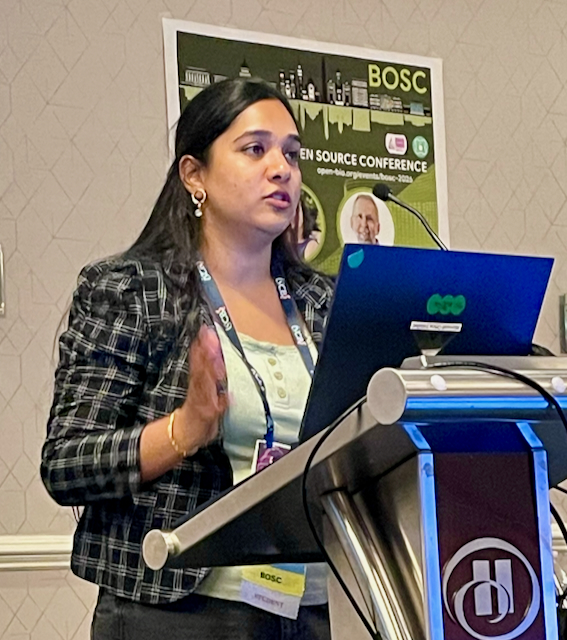
The Tools and Platforms session covered a range of topics in open-source bioinformatics, including new computational methods for sequence and omics analysis, platforms and AI-enabled ecosystems for biological data, and strategies for integrating and harmonizing data across modalities, tissues, and institutions. A session on FAIR Data & Governance discussed open platforms for FAIR, AI-ready research data; and the governance, consent, and licensing frameworks that enable the responsible sharing of sensitive human data.
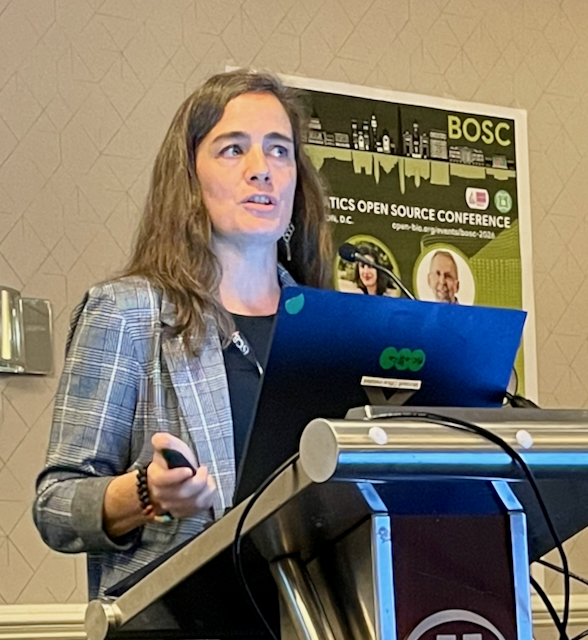
The AI session included talks that explored what AI can and can’t yet do for bioinformatics: for example, how LLMs can accelerate work like drafting data management plans, updating training materials, and cleaning up metadata; and where AI still falls short and needs human oversight. A final theme was how AI is reshaping open-science culture. Another session covered Workflows & Pipelines, always popular topics at BOSC. Nearly every bioinformatics project needs to employ some sort of workflow; the emphasis at BOSC is on reusable, reconfigurable component-based approaches. (Yes, this is still relevant even in an era when you can ask a generative AI assistant to design a pipeline from scratch for you.)
For the first time at BOSC, one of our presenters used text to speech to give a talk. We are grateful to the extra tech support provided by ISCB staff to enable this.
Posters
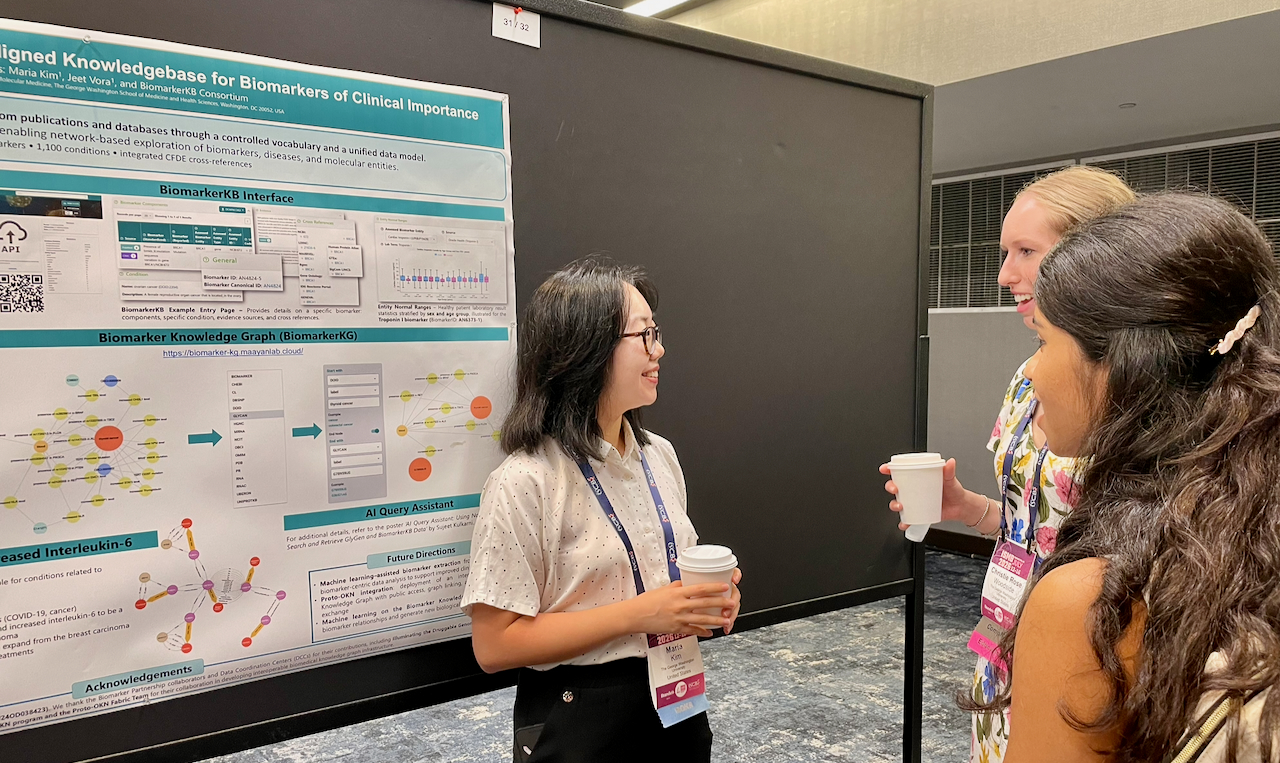
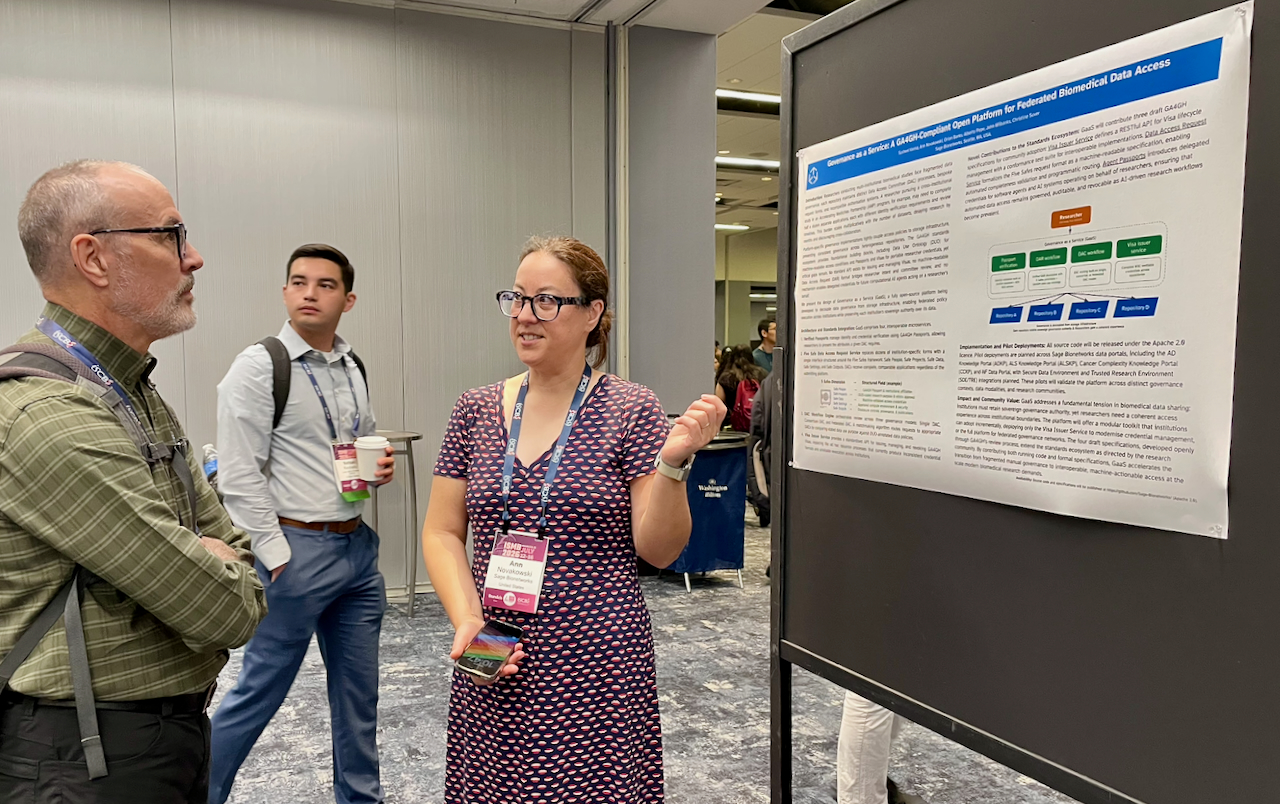
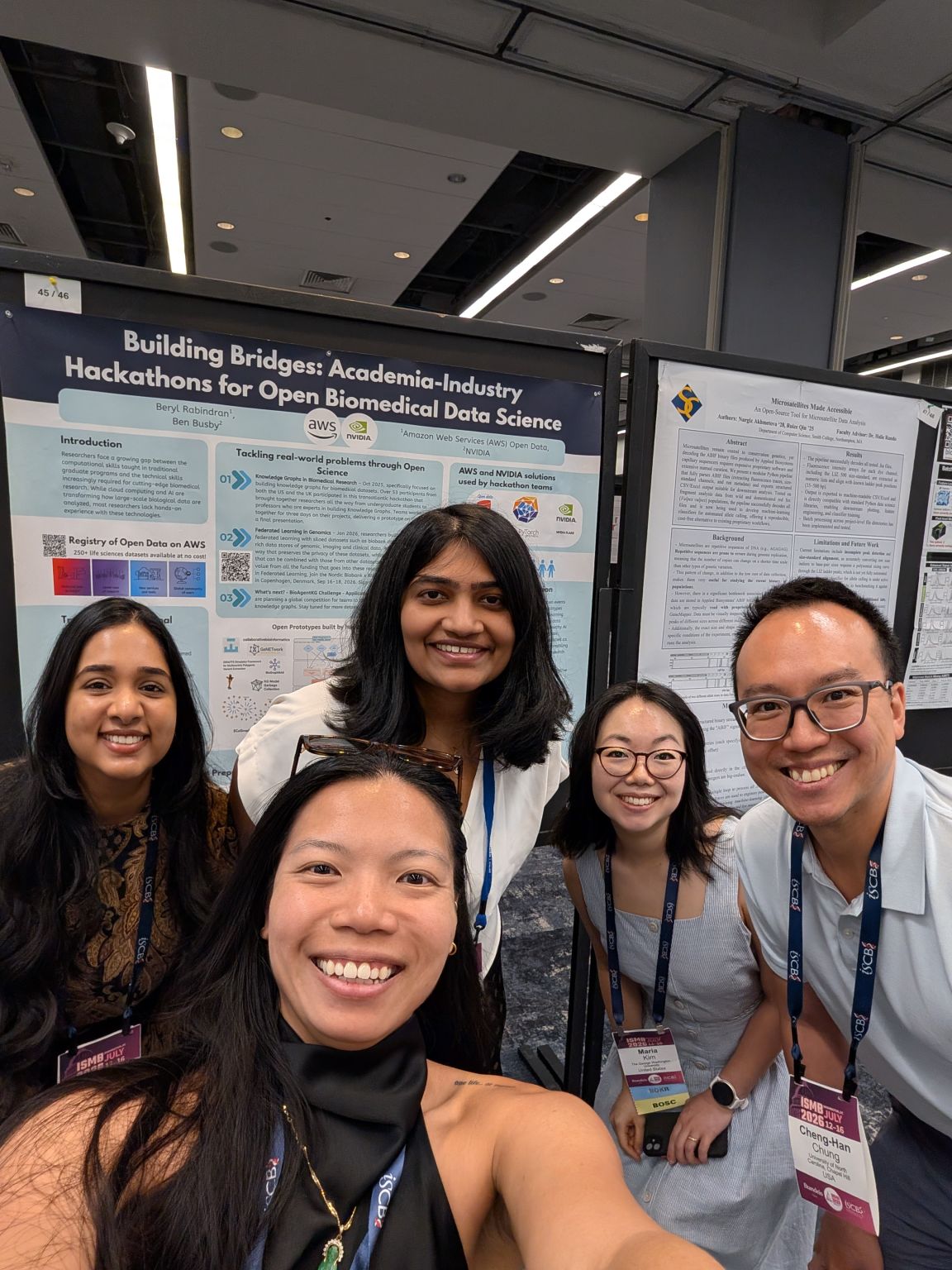
The poster sessions, held during the coffee breaks, drew large crowds to the poster / exhibit hall. Posters offer a great opportunity for presenters to have extended discussions with people who are interested in their research.
BOSC dinners
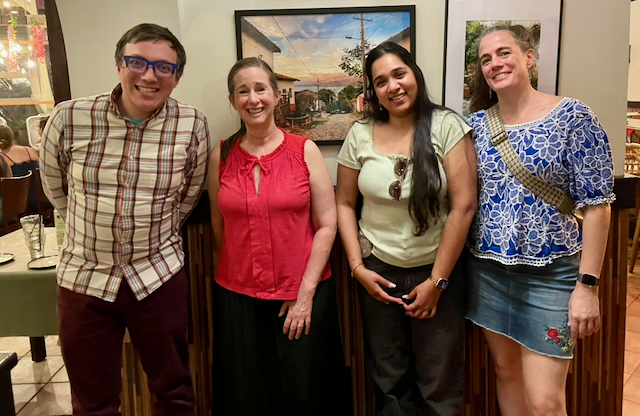
BOSC is not just a conference; it’s also a community. One of the highlights of attending BOSC in person is the opportunity to meet and talk to other people in the open source bioinformatics field. The BOSC dinners we organize (this year there were two) are always a great opportunity to chat with other participants in an informal setting. The first BOSC dinner was held at DC Vegan; the second at local Mexican restaurant La Tamarinda.
Thank you!
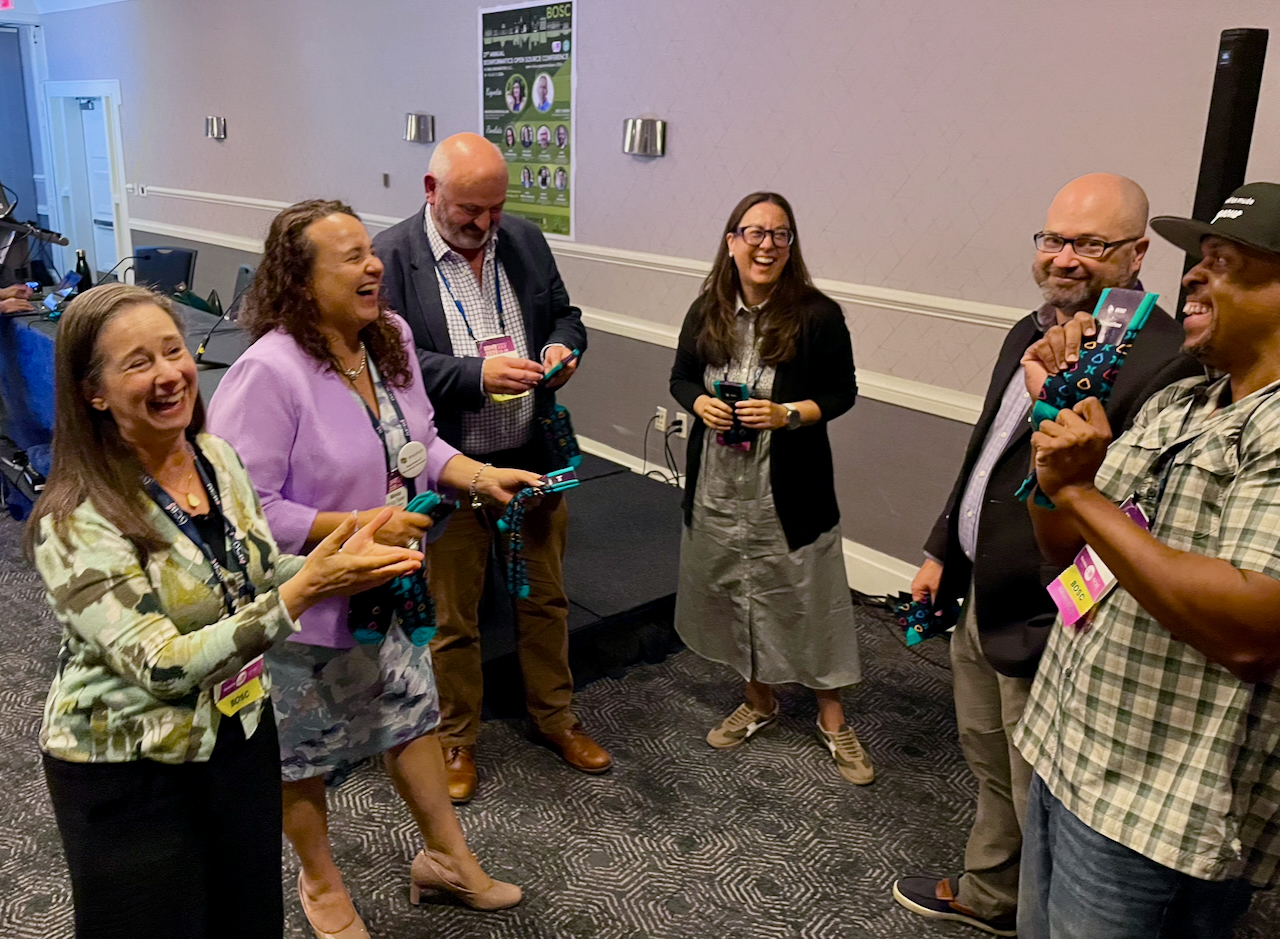
We thank everyone who helped to make BOSC 2026 a success: the ISCB, the BOSC organizing committee, our reviewers, all our speakers and poster presenters and other participants, and our sponsors, whose generous donations enabled us to offer free registration to several presenters who would otherwise have been unable to attend. We are grateful to Gold sponsors Seqera (with special thanks for the cool socks!) and the NIH Office of Data Science Strategy (ODSS) and Silver sponsor Dryad.
BOSC 2026 was followed by our collaborative work event, CoFest 2026. A report on that will be coming soon.
We look forward to another great BOSC in Copenhagen in 2027!