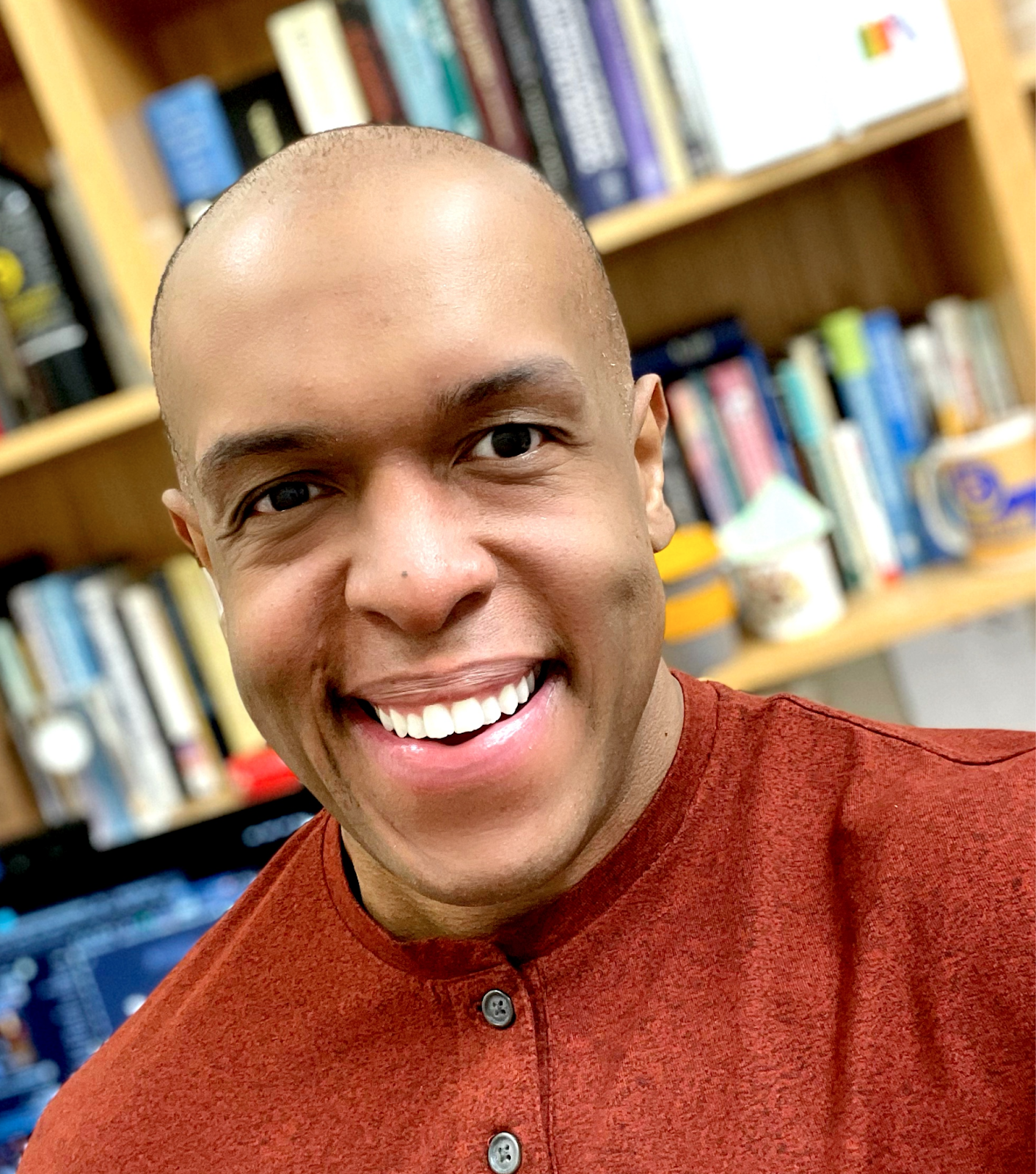
Are you thinking of writing an abstract for BOSC? We’re here to help! The BOSC Organizing Committee is holding two “abstract parties” that will be fun collaborative work sessions. We’ll start by giving some tips for writing a great BOSC abstract, and then open the floor to questions and “workshopping”: show us your in-progress abstract, and we’ll give you helpful suggestions. Or you can just attend and work on your abstract in silent solidarity with others!
[Read More]Join us at BOSC 2021!

BOSC 2021 will take place July 29-30, as part of ISMB/ECCB 2021 Online.
Key Dates
May 6, 2021 (11:59pm EDT): Deadline for submitting one-page talk/poster abstracts May 27: Talk/poster acceptance notifications June 3: Late poster (and Late-Breaking Lightning Talk) submission deadline June 10: Late poster / LBLT acceptance notifications July 29-30: BOSC 2021 Online (part of ISMB/ECCB 2021 Online) July 31-Aug 1: CollaborationFest (CoFest)
About BOSC 2021
BOSC is returning to ISMB in 2021, after a successful partnership with Galaxy for the first Bioinformatics Community Conference last year (BCC2020 online). Originally slated to take place in Lyon, France, ISMB/ECCB 2021 will be held online, and features over a dozen tracks, including BOSC. As usual, BOSC will include keynote talks, longer and shorter (lightning) talks from submitted abstracts, posters, Birds of a Feather, and more!
[Read More]Seeking community volunteers: nomination open for OBF board election 2021
TL;DR: Nominate candidates or yourself for the OBF board via this form or work with OBF in other volunteer capacities.
Nominations are welcome for the OBF Board election
OBF is committed to promoting the practice and philosophy of Open Source software development and Open Science within the biological research community. The roles and functions of OBF have evolved over the last 20 years, and currently include:
- hosting and sponsoring the annual events, Bioinformatics Open Source Conference - running open source events like CodeFests and Google Summer of Code (GSoC) - offering Event fellowships to promote diversity of underrepresented community members at open source events - onboarding and supporting OBF member projects by providing financial management support (e.g., reimbursements and payments and advertising) - maintaining OBF website, social media and newsletter for information dissemination - advocating through policy and public statements
[Read More]Domain names available for adoption
The OBF has two sets of domain names available for adoption by a non-profit or open source project: biows.org, biows.com, biows.net and biocpp.org, biocpp.com, biocpp.net
These domains were registered and donated to us with bio-web-services (biows) and bio-c-plus-plus (BioC++ or BioCPP) in mind, but we’ve failed to find a good home for them.
Please note that this is like adopting a free puppy - we’ll transfer them at no cost, but domain names come with annual renewal charges which the recipient organisation would be responsible for paying.
[Read More]MetaDocencia: Teaching to Teach (Bioinformatics and more) Online in Spanish
The Open Bioinformatics Foundation (OBF) Event Fellowship program aims to promote diverse participation at events promoting open-source bioinformatics software development and open science practices in the biological research community. Dr. Laura Ación , a researcher at the Instituto de Cálculo, University of Buenos Aires, Argentina . She is also one of the co-founders of MetaDocencia , which she could partly support with the OBF Event fellowship granted to her in the December 2019 application round.
[Read More]Google Summer of Code 2020 Wrap Up
OBF was accepted as a mentoring organisation for Google Summer of Code this year. It was another good year for OBF, with Kai Blin, Michael R. Crusoe, Sarthak Sehgal, and Yo Yehudi as administrators. We hosted eight students all of which successfully completed their work:
- Srijan Verma (mentors: Dmitry Petrov, Dymitr Nowicki, Vlada Tyshchenko, Anton Kulaga) - Healthcare-Researcher-Connector (HRC): A Federated Learning package for bridging the gap between Healthcare providers and researchers
- Himanshi Mathur (mentors: Jun Aruga, Evan Nemerson, Michael R. Crusoe) - Implementation of SVML in SIMDe ( final report, other blogs, SIMD Everywhere)
- Boshen Yan (mentors: Amal Thomas, Marius Beek, Saket) - Implementing user-friendly search features in PysraDB ( final report, weekly writeup, work summary)
- Shekhar Shukla (mentors: Oliver Alka, Hannes Röst, Timo Sachsenberg) - OpenMS R Package ( final report, blogs, OpenMS)
- Francesco Porto (mentors: George Githinji, Erik Garrison, Pjotr Prins) - Parallel Graph Traversal for Variation Graphs
- Eliza Martin (mentors: Dymitr Nowicki, Vlada Tyshchenko, Anton Kulaga) - Protein sequence and structural analysis CWL pipeline for comparative biology
- Hidayat Ullah Khan (mentors: Jun Aruga, Evan Nemerson, Michael R. Crusoe) - SIMDe: Add implementations of ISA extensions (SSE4.2 and AVX512) and NEON implementations of SSE4.1,SSE4.2,SSE3,SSSE3 ISA extension ( final report, mentee blogposts, SIMD Everywhere)
- T. Waschischeck (mentors: Chris Bielow, Julianus Pfeuffer) - Using DeNovo Sequencing to Predict Protein Database Suitability ( final report, student blog, OpenMS)
This year, OBF received 5000 USD from Google for being a mentoring organisation. The funds from GSoC go into the general OBF Fund that is primarily used to sponsor OBF Event Fellowships which is a program aimed at increasing diverse participation at events promoting open science practices such as resource development and dissemination in the bioinformatics and biological research community.
[Read More]Call for applications for OBF Event Fellowship, Round 2 of 2020
We are glad to announce that the call for applications for the OBF Event Fellowship is now open. The deadline for this round is 1 October 2020. Applications should be submitted via this Google Form.
Renaming from “OBF Travel Fellowship” to “OBF Event Fellowship”
One of the goals of the OBF fellowship is to increase the participation of members from traditionally underrepresented groups at events or communities that promote Open Source software development and/or open science practices in the biological sciences. Since so many scientific meetings have been or are now run online, and we wish to explicitly support remote participation for this year, we are renaming ‘OBF Travel Fellowship’ to ‘OBF Event Fellowship’.
[Read More]Lessons learned from organizing a virtual conference (BCC2020)
BCC2020 (the collaborative BOSC + GCC meeting) was held online, with over 800 people registered for some part of the meeting. We used Remo.co as the technology platform, along with Discord for chat. Read about why we chose those, how it worked out, and our tips for others who are organizing virtual conferences here.
“Table view” in Remo during BCC2020
BCC2020 pre-conference open house

After much discussion, the BCC2020 organizing committee has decided to hold the meeting on Remo.co, which is similar to Zoom but offers a more conference-like experience, with “floors” and “tables” where you can mingle with other attendees. It has great small group and presentation support, including for posters and demos. It’s also more fun than most online conference platforms.
Because Remo is not familiar to most BCC participants, we are holding two open houses, one in each hemisphere, the day before BCC training starts. These walk-throughs will introduce participants to Remo’s features and demonstrate how to navigate between sessions, poster/demos, BoFs, training and everything else.
[Read More]Help us make BCC2020 a rewarding online experience!
We’re old hands at organizing in-person BOSC s (some of us were involved in planning the very first BOSC, in 2000), but this is the first time we’re attempting an online conference, and we want your help to make BCC2020 a rewarding experience for all.
We know many of you have attended other virtual conferences recently, and we’re interested in hearing what worked well and what didn’t. In particular, we are trying to figure out how to make virtual posters work, and how to run Q&A (with audio, or just typed? live, right after the talks, or asynchronous?). We’re also interested in ideas for adding fun social elements to what could otherwise be a pretty dull extended videoconference.
[Read More]