
Eric Green (Illumina)
From the Human Genome Project to the Realization of Genomic Medicine: A Scientific, Medical, and Societal Journey
Abstract
The coming decade offers great promise for human genomics and genomic medicine. Since the completion of the Human Genome Project over two decades ago, genomics has become progressively entrenched within the bedrock of the biomedical research enterprise. Capitalizing on the momentum of the project’s successful completion, the field of genomics has increasingly expanded and matured, such that genomics is now central and catalytic in basic and translational research, and studies now regularly demonstrate the vital role that genomic information can play in clinical care. Looking ahead, the anticipated advances in technologies, biological insights, and clinical applications (among others) will lead to more widespread dissemination of genomics throughout biomedical research, a growing adoption of genomics into medical and public health practices, and an increasing relevance of genomics in everyday life. At the same time, many challenges remain and require ongoing attention, such as understanding the biological complexities of the human genome, untangling the complex roles that genomic variants play in health and disease, and ensuring that genomics gets broadly and equitably integrated in medicine around the world.
Biography
Dr. Eric Green, M.D., Ph.D., is the recently appointed Chief Medical Officer at Illumina. As Illumina’s medical leader, Dr. Green is responsible for guiding global efforts to advance the clinical application of genomics, expand access to precision medicine, and increase diversity in genomic data to improve healthcare for people worldwide.
Prior to joining Illumina, Dr. Green was a genomics researcher and leader at the National Human Genome Research Institute (NHGRI) at the U.S. National Institutes of Health, including serving as the NHGRI Director for more than 15 years. Under his directorship, NHGRI became a driving force in integrating genomics into medicine and public health. Dr. Green was also the founding Director of the NIH Intramural Sequencing Center.
For over two decades, Dr. Green directed a research program that included start-to-finish roles in the Human Genome Project; groundbreaking work on mapping, sequencing, and comparing mammalian genomes; discoveries about the genes involved in several rare genetic diseases; and efforts to accelerate applications of genomics in healthcare. Dr. Green earned his M.D. and Ph.D. in 1987 from Washington University in St. Louis; coincidentally, the word “genomics” was coined in that same year. Dr. Green’s awards include being elected to the National Academy of Medicine in 2023, honored with the 2025 Leadership Award by the American Society of Human Genetics, and designated a Fierce 50 Innovation Honoree of 2025 (which honors “Trailblazers Redefining Health, Science, & Patient Care”).
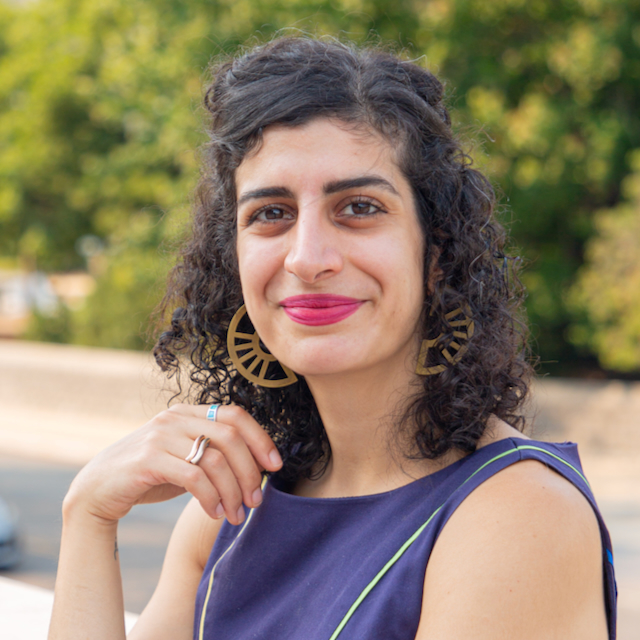
Maryam Zaringhalam (Center for Open Science)
Science for the People: Open science to engage and build trust with communities
Abstract
The open science movement positions scientific knowledge as a global public good — yet in practice, open science is often not designed with public participation in mind. Policy efforts, including landmark federal public access policies to expand access to research, have largely focused on lowering barriers to accessing scholarly literature, datasets, and code. But access alone does not guarantee that research can meet communities where they are and address their most pressing needs.
This gap has real consequences. The research community is increasingly discussing the erosion of public trust in science without fully reckoning with the gap between the research we produce and whether it actually reaches or serves the broader public. Simply put, we can do more to include and engage the communities with whom we seek to build trust. Open science, intentionally practiced, is a way to do that.
Drawing on her experience spanning federal open science policy, biomedical research, and science communication, Dr. Zaringhalam will argue that open science represents an underutilized opportunity to rebuild that trust. By layering science communication and community engagement onto open research outputs, researchers, institutions, and practitioners can create genuine on-ramps for diverse publics — connecting the products and process of science to the communities who stand to benefit from them.
This talk will explore practical approaches to bridging open science and community engagement, centering the needs of communities as a starting point for more meaningful and trustworthy science.
Biography
Maryam Zaringhalam, Ph.D., is the Senior Director of Policy at the Center for Open Science (COS). In that position, she leads COS’s policy efforts to increase openness, integrity, and trustworthiness of research.
Prior to joining COS, Maryam served as the Data Science and Open Science Officer at the National Library of Medicine (NLM) at the National Institutes of Health (NIH), working to enhance capacity in the biomedical research community for data science and open science. From 2022 to 2024, she also served as the Assistant Director for Public Access and Research Policy at the White House Office of Science and Technology Policy (OSTP) where she oversaw federal policy development around public access, open science, and scientific integrity.
Maryam is also a Senior Producer for the Story Collider, where she co-hosts the science policy podcast Science Soapbox, bringing true, personal stories of science to live audiences in Washington, DC. She received her PhD in Molecular Biology from the Rockefeller University.
BOSC keynote speaker selection process
BOSC usually includes two or three keynote talks given by prominent individuals or emerging leaders who are accomplished in areas relevant to the bioinformatics open source community and who represent a range of backgrounds and ideas. Please see our invited speaker rubric for more information about our keynote speaker selection process and criteria.