About the OBF

The Open Bioinformatics Foundation (OBF) is a non-profit, volunteer-run group that promotes open source software development and Open Science within the biological research community. Membership in the OBF is free and open to anyone who wants to help promote open source or open science in a biological field.

OBF runs the annual Bioinformatics Open Source Conference (BOSC).

BOSC 2025 took place July 21-22, 2025, in Liverpool, UK (as part of ISMB/ECCB 2025). BOSC 2026 will be part of ISMB 2026 in Washington, DC.

Learn More

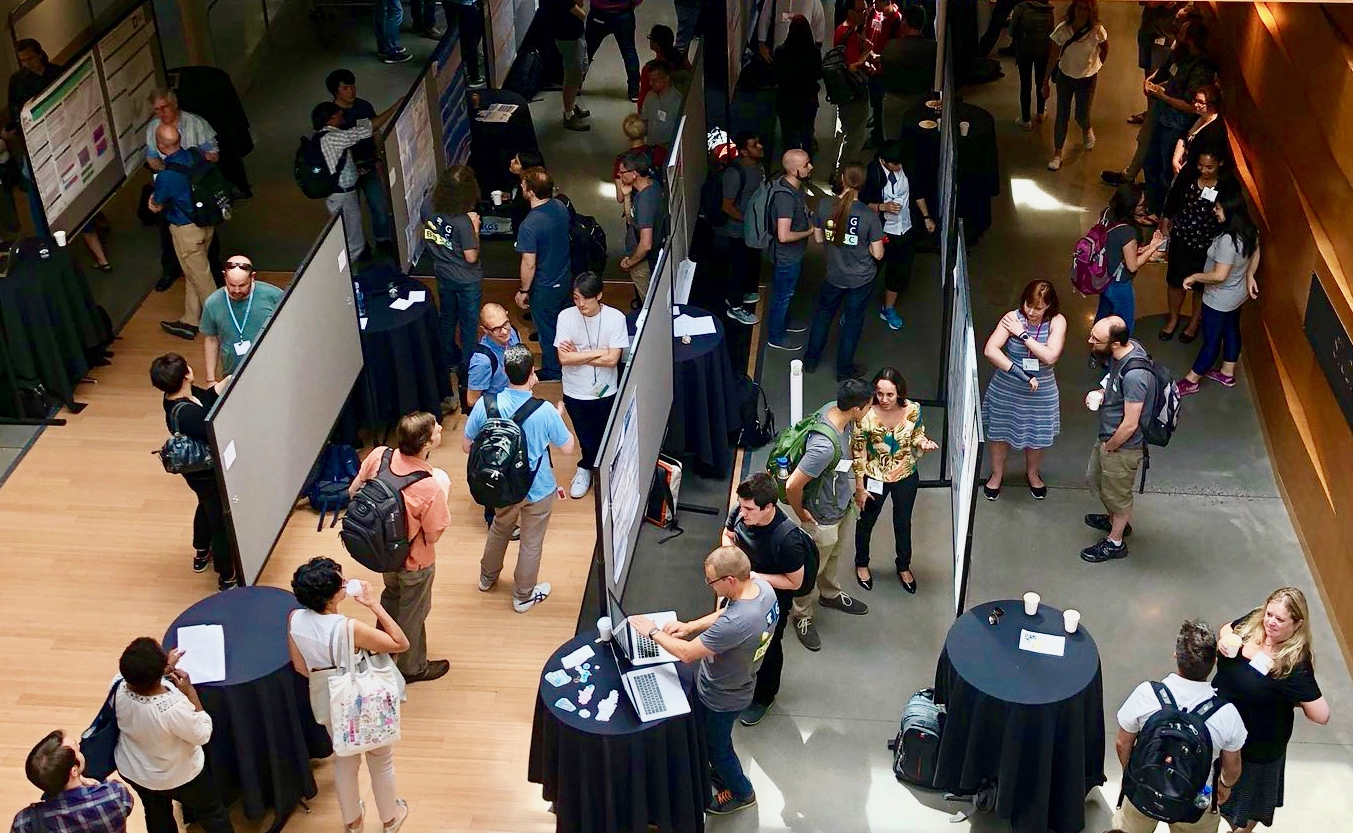
Poster session at GCCBOSC2018

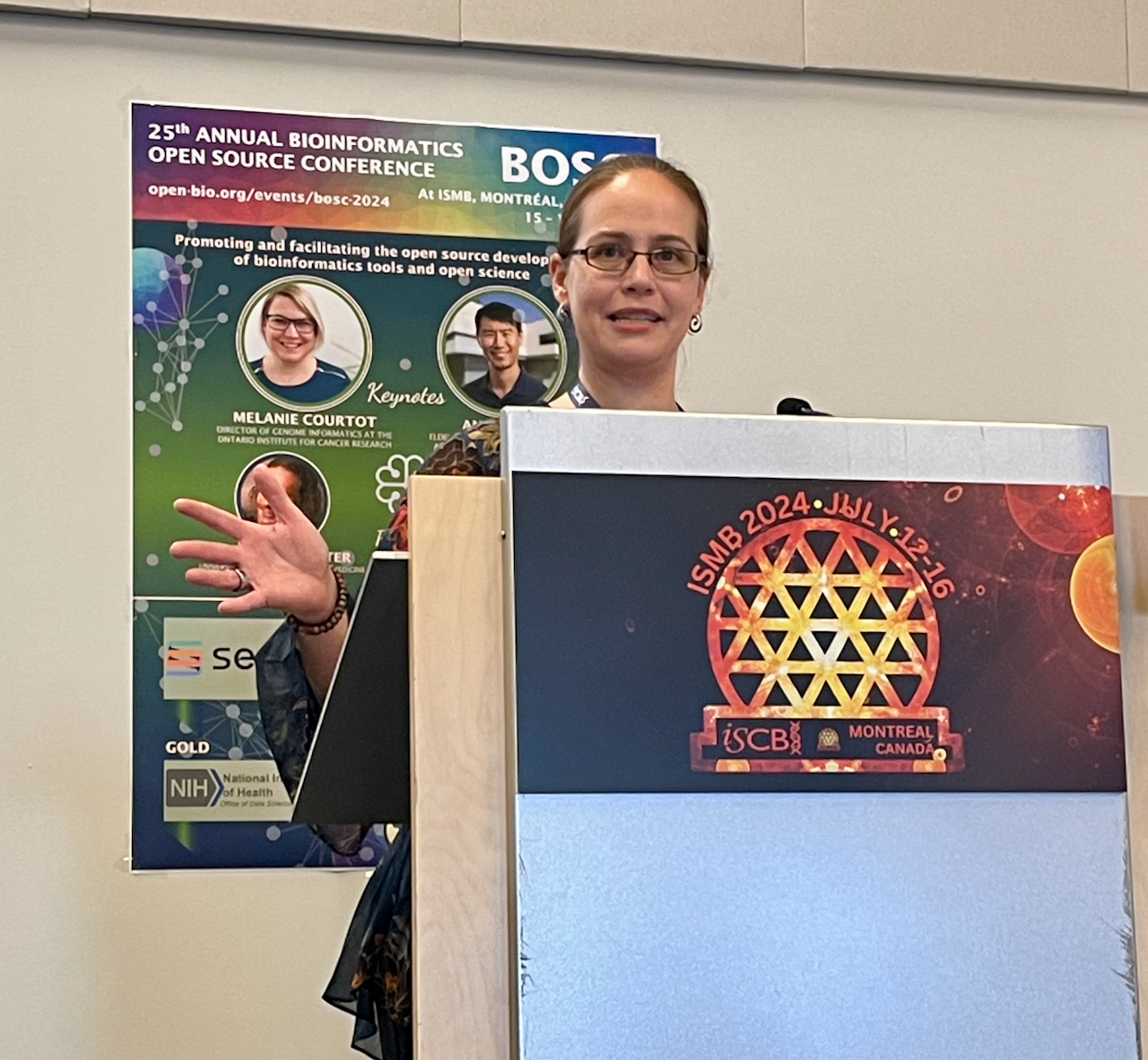
OBF Treasurer Heather Wiencko introducing OBF at BOSC 2024

OBF Event Awards

The OBF Event Fellowship program aims to increase diverse participation at events promoting open source bioinformatics software development and open science in the biological research community.

Apply

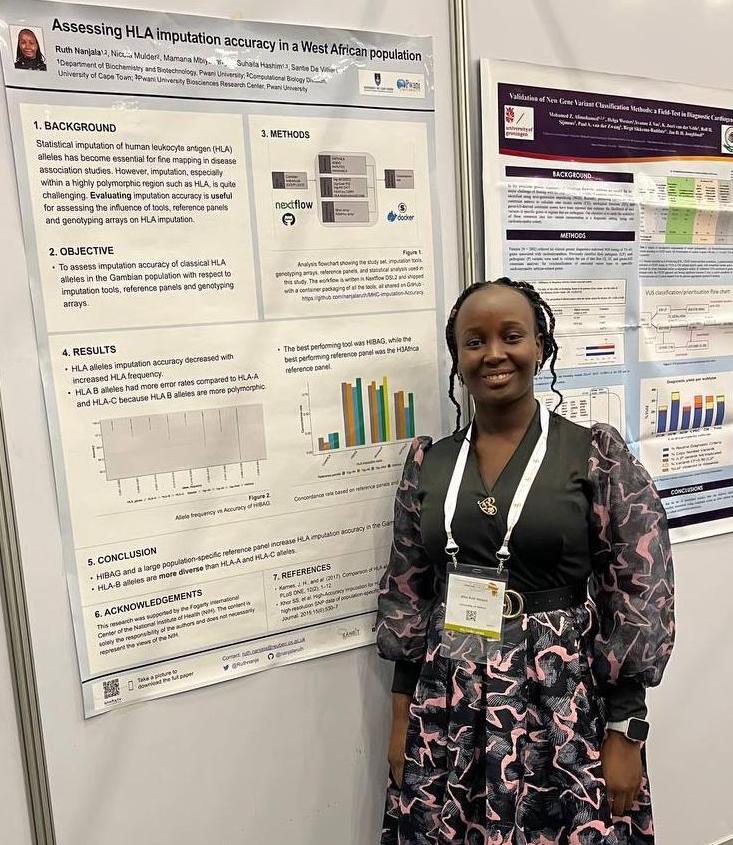
Ruth Nanjala, an OBF Event Award winner, by her poster

Biopython on twitter

Just to let you all know, Biopython is now on twitter. And in case you missed the OBF announcement last month, so is the O|B|F News feed (and BioPerl). You are welcome to follow us (all) on twitter.

I’d also like to remind people there are news feeds for the Biopython news posts (as RDF, RSS, RSS2, or Atom format). We’re planning to have these automatically echoed onto twitter in future… (update) …and that seems to be working now :)

[Read More]

Biopython and next generation sequencing

Those of you doing next generation sequencing may be pleased to know that the next release of Biopython is expected to include support for reading and writing FASTQ and QUAL files within our Bio.SeqIO interface. These formats are used for traditional Sanger capillary sequencing, and Roche 454 sequencing (Roche provide tools to convert from their binary SFF files) with PHRED quality scores. Solexa/Illumina sequencers produce a FASTQ variant where the quality scores are encoded differently, and this is also supported.

[Read More]

Biopython paper published

An Application Note describing Biopython has recently been accepted for publication in the Oxford Journal Bioinformatics. An advance copy of the Open Access article is available online:

P.J.A. Cock, T. Antao, J.T. Chang, B.A. Chapman, C.J. Cox, A. Dalke, I. Friedberg, T. Hamelryck, F. Kauff, B. Wilczynski and M.J.L. de Hoon (2009) Biopython: freely available Python tools for computational molecular biology and bioinformatics. Bioinformatics, doi:10.1093/bioinformatics/btp163

Biopython and version control systems

Initially for evaluation purposes only, Giovanni and Bartek have setup a mirror of Biopython on GitHub, which is automatically updated from the OBF hosted Biopython CVS repository. See our git migration wiki page for details. If this is favorably received, then moving Biopython from CVS to git seems likely at some point this year.

Originally, all the OBF hosted projects used CVS for their source code repositories. At the start of 2008, BioPerl and BioJava moved over to Subversion (SVN), followed by BioSQL. Biopython was originally going to do the same, but this didn’t actually happen. Having all the Bio* projects using the same version control system would have simplified server administration for the OBF, but using SVN wouldn’t really have made that much difference to Biopython development. Discussion on the Biopython development mailing list has since shifted towards next-generation distributed version control systems like git or Bazaar.

[Read More]

Release 1.6 of BioPerl-run, BioPerl-db, BioPerl-network

All,

I am proud to announce that the 1.6 release for BioPerl-run, BioPerl- db, and BioPerl-network are now available by direct download and via CPAN. These are designated as 1.006000, with a requirement for BioPerl 1.6 and higher (1.006000).

FIXED:

  1. Bio::Tools::Run::Primer3 now accepts primer3 or primer3_core as executable names
  2. Bio::Tools::Run::Vista tests now pass if Vista.jar is installed.
  3. bug fix in bioperl-network

What remains for the 1.6 release series:

\* Documentation, Documentation, and Documentation. I haven’t had much time unfortunately to work on documentation, primarily for BUGS/ INSTALL/README etc within db/run/network (the latter has been mainly updated by Brian O.) I will attempt to update these for the next point release, tentatively scheduled for mid-April.

[Read More]

BOSC 2009 Call for Abstracts

Please forward as appropriate and forgive multiple postings.

Call for Abstracts for the 2009 Bioinformatics Open Source Conference (BOSC) 2009

An ISMB 2009 Special Interest Group (SIG) Date: June 27-28, 2009 Location: Stockholm, Sweden URL: /wiki/BOSC_2009 Abstract submission via EasyChair: https://www.easychair.org/login.cgi?conf=bosc2009

Important Dates Monday, April 13: Abstract deadline May 1, 2009: Notification of accepted abstracts May 15, 2009: Early Registration Discount Cut-off date June 27-28, 2009: BOSC 2009

The Bioinformatics Open Source Conference (BOSC) is sponsored by the Open Bioinformatics Foundation (O|B|F), a non-profit group dedicated to promoting the practice and philosophy of Open Source software development within the biological research community. To be considered for acceptance, software systems representing the central topic in a presentation submitted to BOSC must be licensed with a recognized Open Source License, and be freely available for download in source code form.

[Read More]

Google Summer of Code: Call for Bio* Volunteers

Google is committed to run the Summer of Code program again this year. It will be for the 5th time.

In broad strokes, the program funds what you might call remote summer internships for students to contribute to an open-source software project. Projects (or umbrella organizations) wishing to participate in the program apply during the organization application period (March 9-13 in 2009). Those accepted into the program provide project ideas and supply mentors that guide the work on those. Students apply to a project within the program with specific project ideas, based on those suggested or based on their own idea, get ranked by the mentors of the project, and those accepted into the program get paired up with mentors. Projects are chiefly about programming, the coding period is 3 months (Jun-Aug), and there is no travel required by either student or mentor. The program is global; other than the US trade restrictions that Google is under, there are no restrictions as to where student or mentor reside. The main motivations behind the program are to recruit new contributors to open-source projects, and to produce more open-source code. See the program FAQs for more information.

[Read More]

BioPerl 1.6 released

Release Pumpkin Chris Fields has announced the release of BioPerl 1.6 - the first stable release in a several years containing many significant improvements and bug fixes.

I am proud to announce, on behalf of the BioPerl core developers, that BioPerl 1.6.0 is now available.  This is the first BioPerl core release in the 1.6 series and is considered a ‘stable’ (non-developer) release.  The distribution has been uploaded to CPAN and is available under author name CJFIELDS; it should be hitting the various CPAN nodes over the next 24 hours.  A direct CPAN link is here:

[Read More]